

AI game localization: when to retest reusable translation instructions
Game context can change while translation instructions stay fixed. How to define retest triggers and separate workflow approval from batch acceptance.
Read the articleSard Insights
We examine the forces reshaping translation, localization, and language technology — and what they mean for professionals, businesses, and the markets they serve.
33 articles33 results · Page 1 / 3
Game context can change while translation instructions stay fixed. How to define retest triggers and separate workflow approval from batch acceptance.
Read the article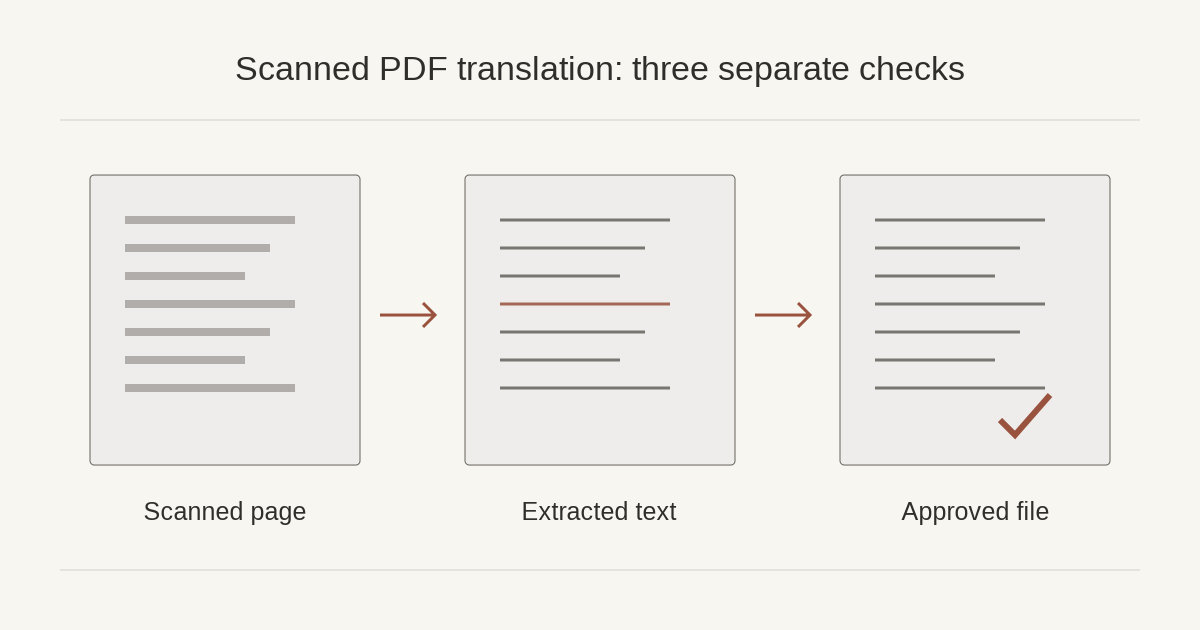 Translation & Localization
A practical guide to scanned PDF translation: check OCR text, define layout requirements and agree what preparation and final delivery include.
Read the article
France’s CNC aid rules recognize writing, performance and associated technical work. What this changes for localization scope, budgets and approval.
Read the article
What image provenance verifies, what it leaves to editors, and how to preserve the record across design, localization and publishing.
Read the article
Compare traffic-based website translation subscriptions by usage limits, review work and portability. What Bablic’s announcement does and does not establish.
Read the article
A finished-looking design may still require reconstruction for a simple revision. Define what must stay editable, then test the changes your next campaign will actually need.
Read the article
A polished page can lose information some readers need. Build accessibility decisions into authoring, translation and reuse, while keeping human review distinct from field completion.
Read the article
New tools ask AI to review content as if it were a target customer. That can expose ambiguity or a mismatch in tone—but how do teams know whether the feedback reflects real readers?
Read the article
What is a custom model? A generative tool configured for a specific task and sometimes paired with selected company references. The article explains how organization, usage rights and review shape its value.
Read the article
A shared preference can reduce the work of telling AI providers whether content may be used for training. It does not automatically govern generated answers or enforce access.
Read the article
AlexandriaX moves dialect translation evaluation beyond isolated sentences to context, target variety and error type. Its leaderboard is a research signal, not proof of product readiness.
Read the article
Crowdin has introduced a way to automate interface captures and link them to source strings. Its strongest value is reducing guesswork; validating the localized build still requires its own tests.
Read the article