Short answer
What is machine translation post-editing (MTPE)?
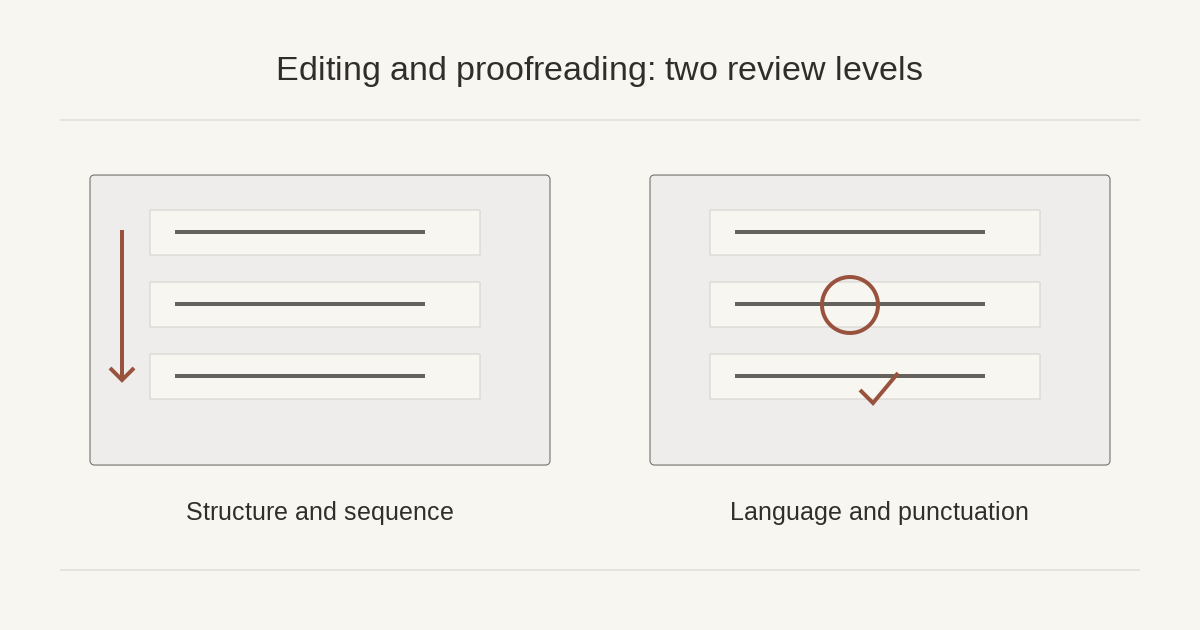
MTPE means comparing machine-produced translation with its source and correcting the output against an agreed purpose and delivery standard. It goes beyond proofreading the Arabic: the reviewer needs to establish whether the original conditions, figures and exceptions survive in the target text.
The draft may come from a translation engine or a generative AI tool. Record how it was produced and what context it received, but do not use the tool name as acceptance evidence. Without the source, language and coherence can be reviewed, while making clear that meaning equivalence has not been checked.
Distinguish draft correction from publication approval
Limited internal use and a public service page may require different treatments. Specify the output: internal understanding, or publishable copy in the brand voice? A light-edit label does not justify a meaning-changing error, and full post-editing does not automatically include design or website testing.
The public abstract of ISO 18587:2017 covers full human post-editing of machine translation output and post-editor competences. When checked on 2 November 2026, ISO/DIS 18587 remained a draft revision under development. The standard is a scoping reference here, not a claim that Sard holds certification or independently verified conformity.
When is post-editing a practical option?
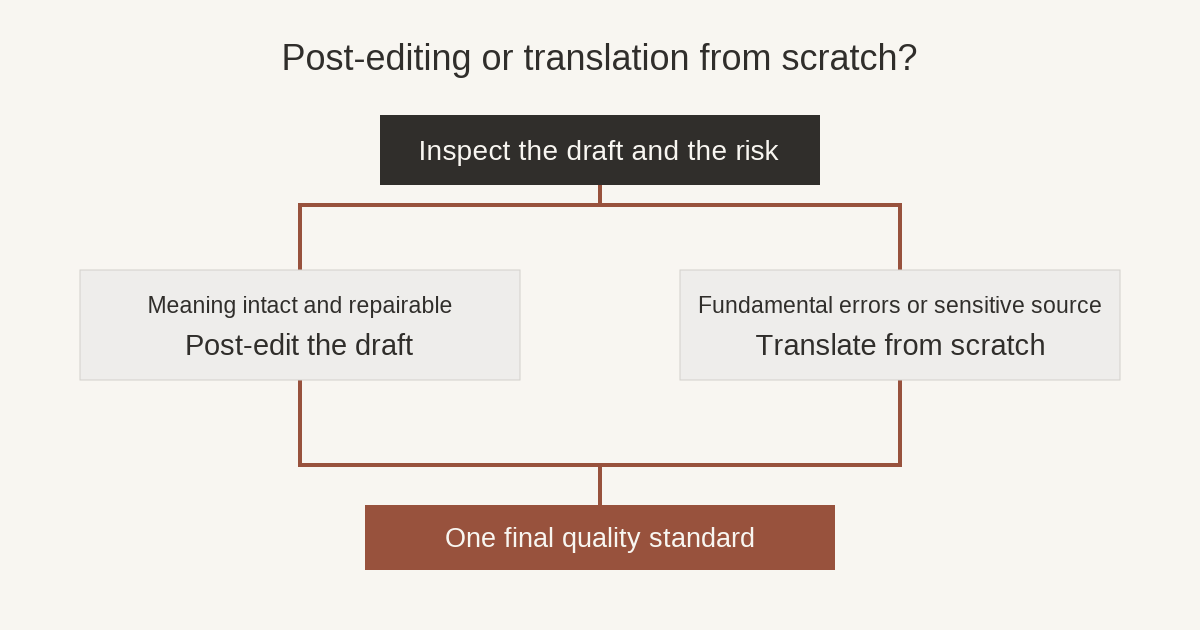
Inspect a sample spanning different parts of the material. If structure and meaning are sound and issues concentrate on identifiable terminology or wording choices, repairing the draft may be appropriate. That is a conclusion about the sample and files, not every output from the tool.
A stable source, terminology list, usage context and available approver make the decision easier. An ambiguous source needs an owner’s decision before a reviewer is expected to resolve an uncertainty they cannot substantiate.
- Compare with the source rather than trusting fluent target text.
- Record correction type and impact, not only the number of edited words.
- Include difficult passages and any in-scope buttons or headlines.
When should you consider translating afresh?
Fresh translation deserves comparison when logical relationships are repeatedly wrong, negations or conditions disappear, or most paragraphs need rebuilding. A campaign dependent on rhythm and brand voice may need copywriting or transcreation, rather than assuming any translation becomes effective advertising after proofreading.
Illustrative example: the source permits returns within 14 days for unopened packs, while the draft states the period but drops the unopened condition. Improving style cannot resolve that omission. Restore the condition and look for the same pattern elsewhere. If omissions recur, reassess the workflow before processing the full batch. This is a hypothetical example, not a Sard project result.
Is machine translation post-editing always faster?
No. A published study by Silvia Terribile, based on extensive production data from a language service provider, found post-editing usually, but not always, faster. Average speeds could obscure substantial variation, and edit distance was not a reliable productivity proxy. This does not establish a specific saving for Arabic or for your project.
For a practical comparison, use samples of comparable difficulty and purpose: one post-edited from machine output and another translated from source. Apply the same acceptance criteria and count verification, queries, correction transfer and final review. Do not compare machine draft time with a complete human delivery.
How is machine translation post-editing priced?
A useful estimate needs the source, draft and an example of the final format. Work may be priced by time, words or an agreed scope; select the unit after assessing effort. Ask whether source comparison, editing, a second review, formatting and in-product checks are included.
Hypothetical calculation: two hours repairing a draft, one verifying it and half an hour preparing delivery add up to three and a half hours. That cannot fairly be compared with two hours of fresh translation if its review and preparation are excluded. This illustrates a comparison method, not a Sard price or service estimate.
Prepare a handover that prevents rework
Supply matching versions of the source and draft, and identify changes your team made after generation. An outdated file can cause a reviewer to fix a resolved issue or miss a newer commercial change. Use redacted material or an approved channel for sensitive information.
Agree how queries and corrections will be delivered, who approves facts and voice, and what happens if the sample suggests fresh translation is preferable. Record that decision before assigning the full batch.
- Source and draft with version, language and market.
- Content purpose, channel, voice guidance and terminology.
- Protected facts and conditions, with their approval owner.
- Delivery format, review rounds and design-testing boundaries.
- Tool-use, confidentiality and file-handling policy.
Can one AI tool review another tool’s translation?
An additional automated check may flag a difference or suggest an alternative, but agreement between two tools does not establish accuracy. Both may repeat a mistake or polish wording while losing a condition. Keep the source as the reference and specify human checks and unresolved questions.
If additional tools are used, confirm that project policy allows the material to be shared with them. Distinguish a flag needing investigation from a correction approved by a specialist. An automated suggestion is not publication approval.
Decide on a sample, then reassess after the first batch
Start with a representative sample and agree the workflow, deliverables and acceptance criteria. After the first batch, review correction causes, late questions and total elapsed effort. If post-editing becomes continuous retranslation, change the scope rather than continuing under a label that no longer describes the work.
Sard can assess the source and draft to identify whether the material needs source-to-target review, editing or fresh translation. Scope follows file assessment; an existing draft is not a promise of a fixed discount.
Sources and further reading
- ISO 18587:2017 — Post-editing of machine translation output
Public abstract: full human post-editing and post-editor competences; this article does not claim Sard certification.
- ISO/DIS 18587 — Draft revision
Draft under development when checked on 2 November 2026; not a published replacement standard.
- Silvia Terribile — Is post-editing really faster than human translation?
Exploratory production-data study; findings do not establish a guaranteed saving for Arabic or any individual project.